
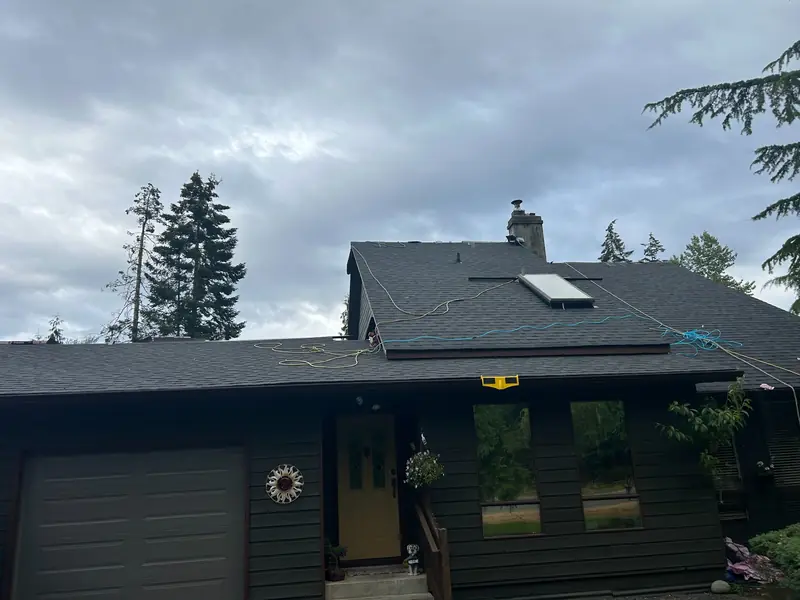
Describe the symptom without guessing the cause
A mark on a ceiling does not, on its own, identify the point where water entered. Note when the mark appeared, whether it changes and what has already been tried. Ground-level exterior photos and accessible interior photos can help explain the concern. Leave roof access to people equipped to assess it safely. The investigation needs to connect the symptom with the relevant roof or building detail.
Give roof connections a place in the estimate
Chimneys, pipe penetrations, skylights and adjoining walls all need to be considered when defining roofing work. If you are replacing the main covering, establish how these features will be treated rather than assuming they are included automatically. Mention any feature scheduled for removal or replacement. A defined approach to the connections makes the proposal easier to understand and helps coordinate responsibilities when another trade is involved.
Bring inspection findings into the roofing plan
If a building inspection has identified a roofing concern, share the relevant report before approving changes. A written finding can give the assessment a useful starting point, especially if several people have already looked at the home. Ask how the proposed roof work addresses each finding and which questions need a closer look on site. Keep the report with the agreed scope so the decisions remain clear when the work begins.
Choose the material after reviewing the details
You may prefer the texture of shingles or the appearance of a metal roof. Both choices still need a property-specific proposal. Share any areas with unusual access, lower roof sections or connections to neighbouring structures. The right conversation covers the finished appearance and how the proposed work will be carried out. Photos in our gallery can help you explain a preference without treating another home's roof as an identical design.