
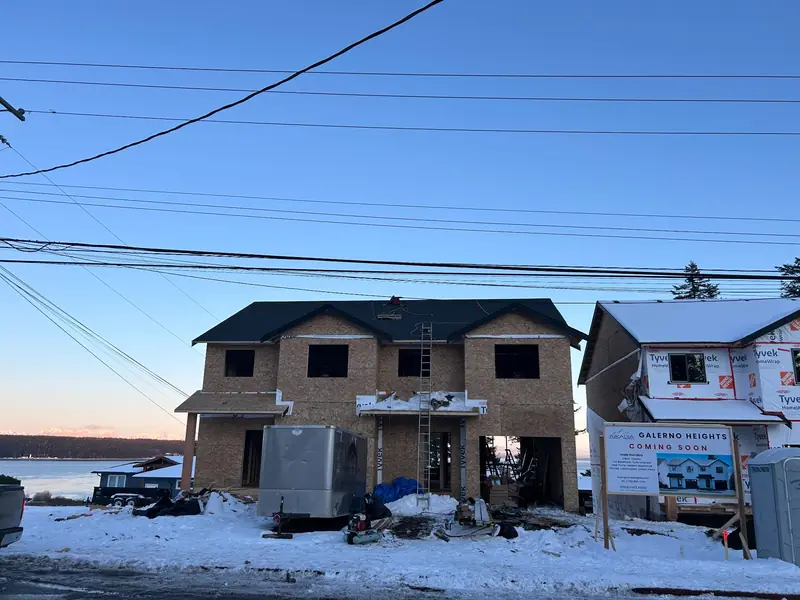
For a new roof, start with the current drawings
Send the roof plan, relevant elevations and any specified products or details. Identify the current revision and the person coordinating construction. If a roof detail is still being designed, point that out rather than treating it as settled. An estimate is more useful when everyone understands which drawings it follows and which decisions could still change the material selection or installation scope.
For an existing home, explain what will stay
A replacement project needs to establish what is being removed and what remains. Mention skylights, chimneys, lower roofs and any planned changes to the building. If an addition connects to the existing house, separate the new work from the reroofing work in the discussion. Clear boundaries make the proposal easier to price, review and coordinate with another contractor working on the property.
Sort out connections between trades
Roofing can meet work handled by carpenters, mechanical contractors or other specialists. Discuss who is supplying and installing components that affect the roof, including new openings and equipment connections. Identify the contact who can resolve questions about the design. The roofing proposal should reflect agreed responsibilities rather than leave each trade to assume that someone else will handle a detail at the connection.
Build the schedule around confirmed decisions
Provide your intended timing, then distinguish that target from a confirmed installation arrangement. Product selections, site readiness and the agreed scope all need attention before work can be organized. Let us know if other construction depends on the roof, or if access changes as the project progresses. For an existing roof concern that cannot wait for a larger project, discuss repair assessment separately from the future replacement plan.